

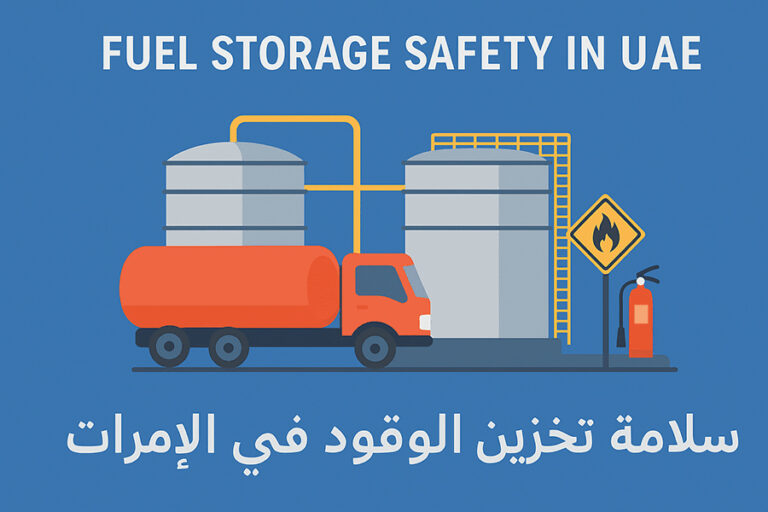
In the UAE’s industrial and energy sectors, fuel storage safety isn’t optional — it’s a regulatory and operational necessity.
Whether your business deals with diesel, furnace oil, or lubricants, the way you store, handle, and monitor fuel directly impacts safety, compliance, and efficiency.
At Safeenat Al Sharq, we’ve seen how proactive fuel management not only prevents accidents but also saves costs and supports sustainability goals.
Why Fuel Storage Safety Matters
Fuel, by nature, is highly flammable. Improper storage can lead to fires, contamination, equipment failure, or even regulatory penalties.
Beyond the obvious safety risks, poor handling can result in environmental pollution — which UAE authorities take very seriously.
By implementing correct storage procedures, companies protect their assets, staff, and the surrounding environment.
UAE Regulations on Fuel Storage
The UAE government enforces strict regulations for petroleum product handling through local environmental agencies and civil defense authorities.
Key requirements include:
Licensed fuel storage facilities only.
Proper containment systems to prevent leaks.
Certified tanks with periodic inspection and calibration.
Trained personnel for loading, unloading, and monitoring operations.
Safeenat Al Sharq operates fully under these laws, ensuring clients receive fuel that is safely stored, tested, and delivered.
Best Practices for Safe Fuel Storage
Use High-Quality Storage Tanks
Tanks must be corrosion-resistant and fitted with proper vents and overfill protection.
Regular inspections help detect early signs of damage or leakage.
Control Temperature and Pressure
Fuel expands with heat. In the UAE’s desert conditions, temperature control is critical to prevent vapor buildup.
Proper ventilation and shaded installations reduce pressure inside tanks.
Fire Prevention & Safety Equipment
Install fire extinguishers, foam systems, and flame arrestors near tanks.
Maintain emergency shut-off systems and ensure staff are trained in firefighting procedures.
Routine Fuel Quality Testing
Contaminated or degraded fuel can damage engines or production equipment.
Safeenat Al Sharq performs laboratory testing (ASTM standards) for parameters like sulfur, water, viscosity, and flash point before every delivery.
Staff Training & Documentation
Human error is one of the main causes of fuel-related incidents.
Regular training on storage protocols, safety drills, and reporting procedures ensures compliance and readiness.
Environmental Responsibility
Safe storage is part of environmental protection.
Leaked or spilled fuel can contaminate soil and groundwater, posing long-term ecological risks.
Safeenat Al Sharq integrates environmental safety with every step — from collection of used lubricants to delivery of refined fuels.
Partnering with Safeenat Al Sharq
With over 20 years of experience in fuel storage, recycling, and supply, Safeenat Al Sharq provides UAE industries with complete peace of mind.
Our Sharjah facility includes modern storage tanks, weighing systems, and a laboratory for on-site testing.
We help clients maintain compliance, optimize safety, and achieve operational excellence.
Fuel storage safety is not just about following rules — it’s about building a responsible, efficient, and sustainable industrial culture.
By partnering with Safeenat Al Sharq, businesses can ensure that their fuel is stored, handled, and delivered safely — protecting people, assets, and the environment.