

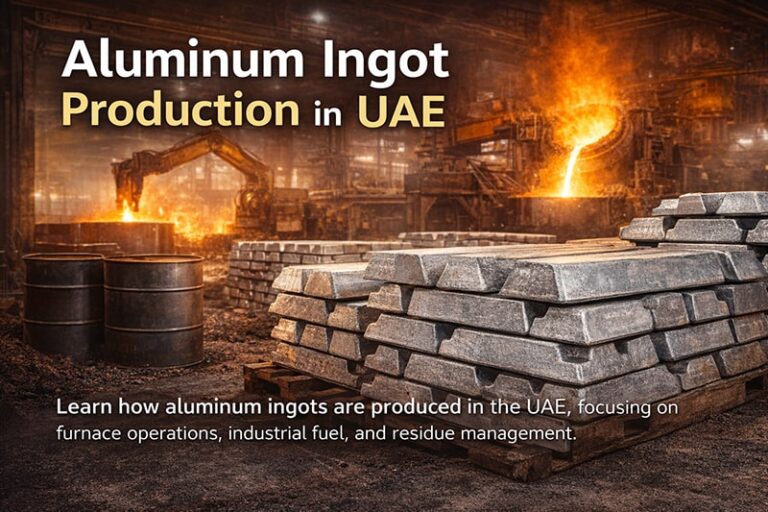
Aluminum ingot production in the UAE is closely tied to the country’s industrial energy infrastructure. While aluminum ingots are the final product supplied to construction, automotive, and manufacturing sectors, the process behind their production depends heavily on stable furnace operations, reliable industrial fuel supply, and controlled waste management.
Understanding how aluminum ingots are produced and the industrial systems that support this process, provides insight into why energy reliability, fuel quality, and residue handling play a critical role in maintaining consistent production output.
Aluminum Ingot Production and Furnace Operations
Aluminum ingots are produced by melting aluminum feedstock in high-temperature furnaces. These furnaces operate continuously and require stable heat output to maintain controlled melting and alloying conditions.
In many UAE facilities, furnace operations depend on:
- Furnace oil
- Heavy industrial fuels
- Diesel-based energy sources
Fuel stability directly influences:
- Melting efficiency
- Oxidation control
- Metal loss rates
- Furnace maintenance cycles
Energy Consumption in Aluminum Ingot Manufacturing
Aluminum melting is one of the most energy-intensive metal processes. Even small variations in fuel quality can affect:
- Furnace temperature stability
- Combustion efficiency
- Overall energy consumption per ton of aluminum
For this reason, aluminum producers increasingly focus on fuel consistency rather than price alone. Industrial fuel suppliers that provide tested, blended, and documented fuels help manufacturers maintain predictable operating conditions.
Role of Industrial Fuel Blending
Different aluminum ingot facilities operate furnaces with varying designs, burner systems, and temperature requirements. A single generic fuel grade is often not optimal for every operation.
Fuel blending allows industrial operators to:
- Adjust viscosity for burner compatibility
- Control flash point for safe handling
- Optimize combustion efficiency
- Reduce furnace deposits and maintenance needs
Residue Management in Aluminum Smelting
Aluminum ingot production generates several by-products, including dross, spent lubricants, and oil residues. If these materials are not managed correctly, they can:
- Increase contamination risks
- Create environmental compliance issues
- Disrupt furnace operations
Proper collection, segregation, and reuse or disposal of oil residues is a critical part of modern aluminum manufacturing.
Storage and Logistics in Aluminum Production
Aluminum ingot plants rely on continuous fuel availability. Interruptions in fuel supply or improper storage can cause unplanned shutdowns and production losses.
Industrial facilities benefit from suppliers that provide:
- Bulk fuel storage
- Weighbridge-verified deliveries
- Sealed tanker transport
- Consistent scheduling
Why Industrial Fuel Partners Matter to Aluminum Producers
Aluminum ingot manufacturers increasingly work with integrated industrial fuel partners rather than spot suppliers. This approach supports:
- Stable furnace performance
- Predictable production planning
- Environmental compliance
- Reduced operational risk
By managing fuel quality, logistics, and residue handling, industrial fuel terminals play a supporting role in aluminum production without interfering in the core manufacturing process.
Industrial Ecosystem Supporting Aluminum Production in the UAE
The UAE’s aluminum sector benefits from an industrial ecosystem that includes:
- Fuel terminals
- Laboratory testing facilities
- Bulk storage infrastructure
- Industrial logistics networks
Companies that operate across these areas contribute to the long-term stability and competitiveness of aluminum manufacturing in the region.