

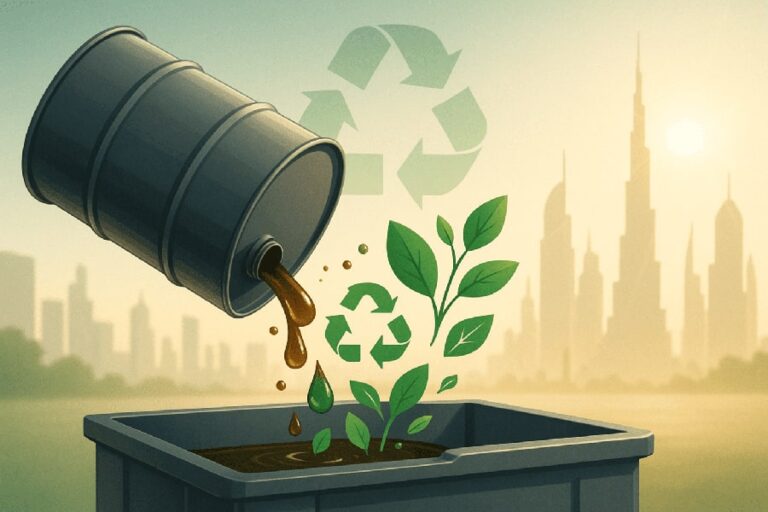
The United Arab Emirates has long recognized the importance of sustainability as a cornerstone of its national vision. From large-scale renewable energy projects to stricter environmental regulations, the UAE continues to push toward a cleaner, greener future.
Among the often-overlooked contributors to this movement is used oil recycling , a vital process that prevents pollution, saves natural resources, and drives industrial efficiency.
What Is Oil Recycling?
Oil recycling involves collecting used lubricants, filtering out impurities, and re-refining them into reusable industrial oils or fuels. Instead of discarding waste oil into the environment, specialized companies like Safeenat Al Sharq process it to restore quality and usability.
Every liter of used oil collected and recycled saves nearly the same amount of new oil from being refined from crude petroleum. This directly reduces carbon emissions and helps conserve the Earth’s limited resources.
Why Oil Recycling Matters for UAE Sustainability
The UAE’s sustainability agenda which highlighted in UAE Vision 2031 and the National Climate Strategy 2050 , emphasizes reducing industrial waste and achieving a circular economy.
Oil recycling plays a crucial role in both:
Environmental Protection: Prevents soil and water contamination from hazardous waste oils.
Energy Efficiency: Re-refining used oils consumes less energy than producing new ones.
Circular Economy: Encourages re-use of materials within industry rather than disposal.
Economic Growth: Creates green jobs and supports a sustainable industrial sector.
Safeenat Al Sharq’s Contribution
For over two decades, Safeenat Al Sharq has been one of the UAE’s trusted partners in used lubricant collection and recycling.
Licensed by UAE authorities, the company follows strict environmental and safety standards in all stages of collection, transportation, and re-refining.
Through its advanced infrastructure and fleet, Safeenat Al Sharq ensures:
Secure collection of used lubricants from automotive and industrial clients.
Environmentally responsible handling and transfer.
Re-processing into reusable industrial products that meet regulatory standards.
This closed-loop approach aligns directly with the UAE’s mission of reducing waste and maximizing resource efficiency.
Oil Recycling and the Circular Economy
In a circular economy, materials are continuously reused and recycled rather than discarded. Oil recycling perfectly fits this model:
Collection: Used oil is collected from industrial, automotive, and marine sectors.
Processing: The oil is cleaned, filtered, and re-refined.
Reuse: The refined oil is repurposed as industrial fuel or lubricant.
This cycle not only reduces dependency on crude oil but also cuts down the carbon footprint of fuel production.
Regulations and Compliance in the UAE
The UAE government enforces strict environmental laws for handling hazardous waste, including used oils.
Safeenat Al Sharq’s operations comply fully with local and federal regulations, ensuring that all collected materials are processed safely and sustainably, contributing directly to the UAE’s compliance with UN Sustainable Development Goals (SDGs).
Future Outlook
As industries in the UAE expand, so does the demand for sustainable waste management solutions.
Oil recycling will become increasingly critical. not just as an environmental service but as a key component of national sustainability policies.
Companies that adopt eco-friendly practices like partnering with Safeenat Al Sharq are better positioned to meet both regulatory requirements and corporate responsibility expectations.
Used oil recycling may not make daily headlines, but it’s one of the most impactful sustainability practices in the UAE.
By transforming waste into valuable resources, Safeenat Al Sharq is helping build a cleaner, more efficient, and sustainable industrial ecosystem in line with the UAE’s ambitious environmental goals.